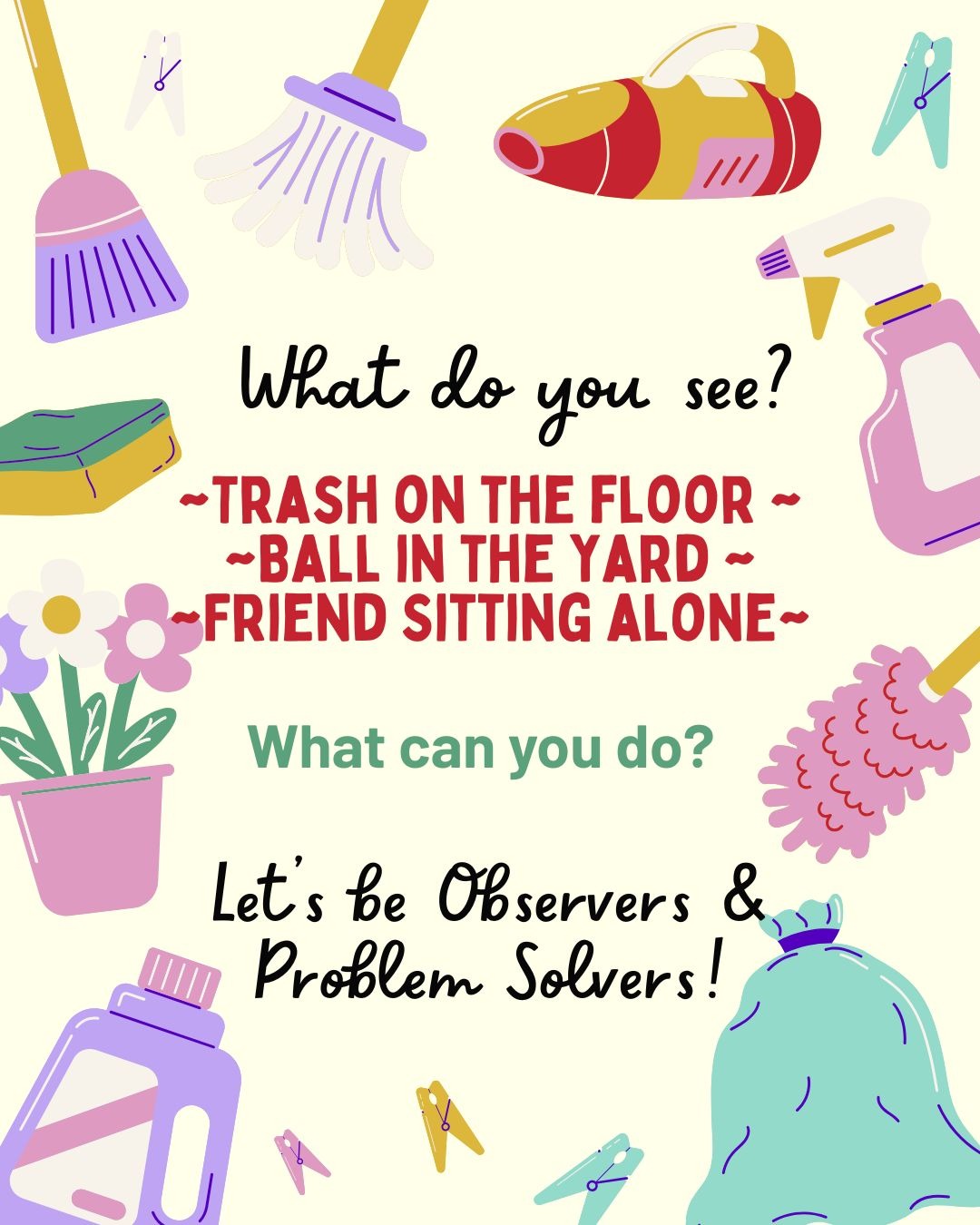
Cultivating the Skills of Noticing
In our fast-paced, screen-filled world, it’s easy for all of us—especially children—to move through life on autopilot. We look, but do we truly see?
Today, we want to talk about a quiet but transformative superpower we can help our children develop: The Skill of Noticing.
Teaching children to be active observers of their surroundings does more than just sharpen their minds; it fosters empathy, responsibility, and a deep sense of community. When a child learns to notice, they move from being passive consumers of their environment to active caretakers of it.
Why Noticing Matters
- It Sparks Proactive Helpfulness: When children are trained to notice, they see when a grand-parent is looking for their glasses, when a friend is sitting alone on the playground, or when a parent has their hands full with groceries. Noticing is the very first step toward empathy in action.
- It Instills Environmental Pride: A child who notices will see the piece of trash left on the park grass, the toy left out in the hallway, or the crumbs left on the kitchen table. By noticing these small details, they begin to understand how their actions (and the actions of others) affect the shared space, leading to a natural desire to keep their environment clean and beautiful.
3 Simple Ways to Teach “The Skill of Noticing”
- Play the “I Spy… Something Out of Place” Game: Turn tidying up or walking through the neighborhood into a game. Ask questions like, “Can you spot three things that belong in a different room?” or “Let’s see if we can find five pieces of litter to clean up at the park today.”
- Practice “The Pause”: Before leaving a room, a classroom, or a picnic spot, implement a 10-second pause. Have everyone stop, look around, and ask: “Are we leaving this space better than we found it?”
- Praise the Notice, Not Just the Action: When your child helps out without being asked, highlight their observation skills. Instead of just saying “Thanks for cleaning up,” try saying, “I love how you noticed those toys were on the floor and took the initiative to put them away. That was incredibly helpful!”
By teaching our kids to look outward, we are raising a generation of mindful, compassionate observers who don’t just occupy a space—they care for it and the people in it.