Seen and Heard as Individuals
Young children have big feelings, deep thoughts, and important things to communicate, long before they have the words to express them clearly. In a Christian Montessori Community, we begin with a simple but powerful belief: behavior is communication.
We’ve all heard phrases like “the terrible twos” or “threenager.” While toddlers and preschoolers certainly experience intense emotions, we see these moments not as rebellion, but as growth. These are children learning how to communicate their needs, boundaries, ideas, and emotions in a world that doesn’t always slow down to listen.
Maria Montessori reminded us that children are whole people right now, not future adults in training. Each child comes with a unique personality, a divine spark, and an unfolding God-given purpose. When we approach children with this understanding, challenging moments become opportunities to truly know them.
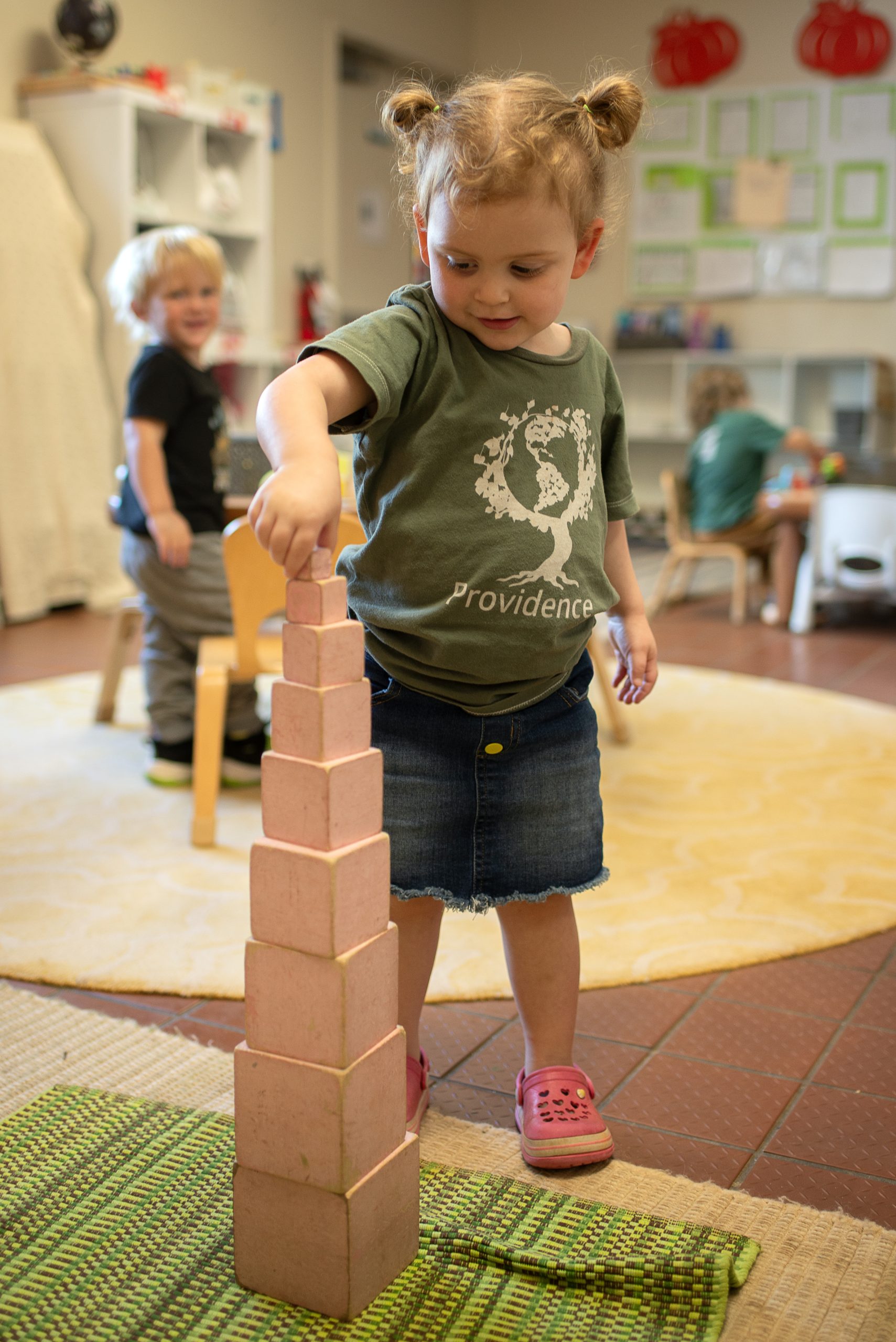
In the Montessori classroom, we don’t rush to control behavior. Instead, we guide children back to relationship and community. Rather than simply saying, “Use your words,” we help children identify and name their emotions. We model language, tone, and respectful communication, walking alongside them as they practice expressing themselves.
When emotions feel too big, we allow space to pause and reset, without shame. Children learn how to regulate their bodies and emotions before rejoining the group. Grace and courtesy lessons provide a framework for respect, empathy, and reconciliation. Mistakes are met with guidance, forgiveness, and restoration.
This isn’t just discipline, it’s discipleship. Over time, as children feel seen and heard, parents often notice fewer meltdowns, deeper communication, and a growing eagerness to come to school.
Children flourish when they know: I am known.
This reflection is drawn from a larger writing project by Denise Marti, Formed for More: Why Christian Montessori Education Makes All The Difference, which explores Christian Montessori education and the role families play in forming children for a life of faith and purpose.